Colorado Real Estate's New Era 🏢
The real estate landscape is transforming faster than ever. In 2026, technology is no longer just a "nice to have"it is the backbone of how properties are priced, marketed, negotiated, and sold. Artificial intelligence, predictive analytics, virtual staging, and automated customer relationship management (CRM) systems have completely reshaped the industry, moving us away from gut feelings and toward precision data.
However, amidst all the algorithms and automation, a fundamental truth remains: buying or selling a home is one of the most significant financial and emotional decisions a person will make. It is, at its core, a people business.
Today’s most effective brokers know that technology doesn't replace the human element; it enhances it. By letting software handle the heavy lifting of data analysis and administrative tasks, agents can focus entirely on what they do best—guiding clients through complex milestones.
Here is how top-tier professionals are leveraging modern tech to elevate the client experience:
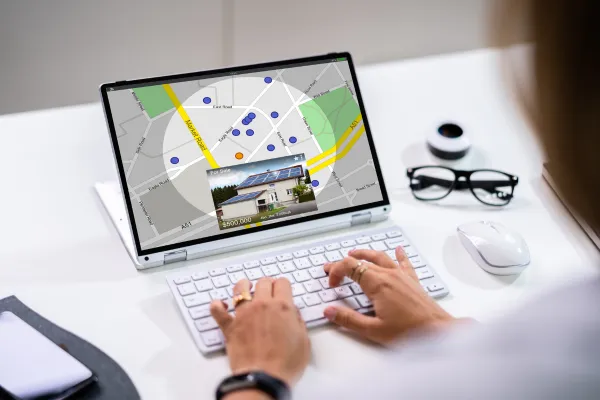
Deliver Better Market Insights: AI-powered predictive analytics evaluate market trends, buyer demand, and micro-neighborhood growth in real-time. This eliminates guesswork, ensuring sellers price their homes perfectly and buyers identify properties with the best long-term value.
Enhance Property Marketing: High-definition virtual tours, 3D walkthroughs, and augmented reality (AR) staging are now the standard. These tools allow buyers to explore and connect with a space from anywhere in the world before ever stepping foot inside.
Improve Client Communication: Automated, AI-driven CRM systems track preferences and streamline outreach. This ensures clients receive the exact information they need, exactly when they need it, without feeling spammed.
Streamline Transactions: Smart contracts and automated workflows reduce the mountain of traditional paperwork, making the closing process faster, more secure, and infinitely less stressful for everyone involved.
Ultimately, an AI bot might be able to calculate a property's value in milliseconds, but it cannot read a room during a tense negotiation. It can't empathize with a family downsizing after 30 years, and it certainly can't tap into the "hidden market" of off-market listings built on local networking. Technology improves efficiency, but trust, experience, and personal relationships will always drive the final outcome.
Frequently Asked Questions (FAQs)
Q: Will artificial intelligence eventually replace human real estate agents? A: No. While AI is incredible at processing massive amounts of data and automating administrative tasks, real estate transactions are highly emotional and complex. Negotiation skills, local networking, and human empathy are things AI simply cannot replicate.
Q: How does predictive analytics actually benefit me as a home seller? A: Predictive tools analyze vast amounts of data—from economic trends to local behavioral habits—to accurately forecast demand. For you, this means pricing your home with pinpoint accuracy to attract serious buyers quickly, rather than testing the market and risking your property going stale.
Q: Are virtual walkthroughs replacing physical home tours? A: Not entirely, but they act as a highly effective filter. Virtual and 3D tours allow buyers to quickly rule out homes that don't fit their needs, meaning that by the time an in-person showing is scheduled, the buyer is already highly qualified and genuinely interested.
Q: With all this technology, is my personal data secure? A: Data privacy is a top priority for modern brokerages. The industry relies on heavily encrypted, compliant CRM platforms and robust data governance frameworks to ensure that your financial and personal information is protected throughout the transaction.

