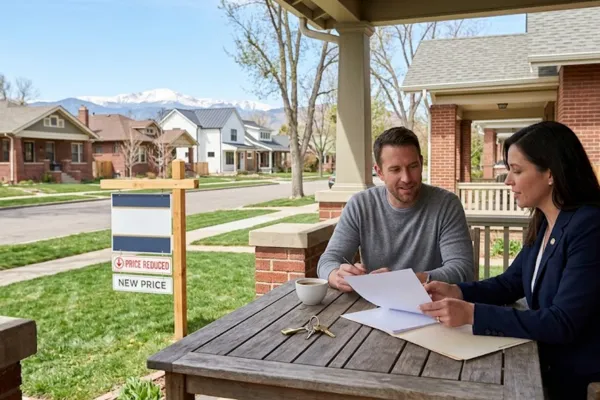
The Art of the Deal: Denver's Q2 2026 Price Reductions and Seller Concessions
If you’ve been watching the Greater Denver Metro real estate market and wondering if buyers finally have room to negotiate, the Q2 2026 data from REcolorado paints a very clear picture: Yes, they do.
The market hasn’t crashed, and homes are still selling. But the days of sellers dictating terms without compromise are squarely in the rearview mirror. Based on closed residential listings from April through June 2026 across 11 metro counties, sellers are consistently utilizing price cuts, below-list acceptances, and closing concessions to get deals done.
Here’s a breakdown of how sellers are adjusting their strategies and what it means for buyers and sellers in the current market.
The Three Tools of Negotiation
The REcolorado report tracks three distinct "price reduction events" that sellers use to facilitate a transaction:
Price Cut: A reduction in the public list price while the home is actively on the market.
Below List: Accepting an offer for less than the final asking price.
Concession: A dollar amount given by the seller to the buyer at closing (e.g., to cover closing costs or buy down the interest rate).
While 26% of listings involved only a concession, 12% of sellers had to use the "triple threat," experiencing a price cut, accepting an offer below list, AND providing a concession to close the deal.
Among homes that experienced these events, the median amounts were substantial:
Median Price Reduction: $25,000
Median Below-List Gap: $15,000
Median Concession: $10,000
Time on Market Changes Everything
If you’re a seller, the data offers a clear warning about the cost of letting a listing linger. As "Days in MLS" (DIM) increase, so does the likelihood of needing multiple pricing adjustments.
In the first seven days on the market, 48% of listings involved only a seller concession, a relatively quick and painless way to sweeten a deal for a buyer.
However, if a home sits for 50-56 days, the picture changes dramatically. At that point, 28% of listings experience all three events (a price cut, a below-list offer, and a concession). Furthermore, the size of the price cut grows exponentially. Listings on the market for 8-14 days averaged a $2,321 price cut; by 50-56 days, the average price cut ballooned to $28,278, more than a 12x increase.
Luxury vs. Starter Homes: Different Strategies
The price point of the home dictates how sellers negotiate:
Luxury Tier (Over $2M): Sellers rely heavily on price reductions. The median price cut in this bracket was a staggering $150,000, with below-list acceptances hitting a median of $100,000.
Entry-to-Mid Tier (Under $600K): Price cuts are much smaller, with a median of roughly $20,000, and below-list gaps hovering around $10,000.
Interestingly, concessions remain the great equalizer. Regardless of whether the home was $500,000 or $2.5 million, the median concession stayed remarkably flat at around $10,000 across nearly every price band.
Where is the Concession Money Going?
When sellers give money back at closing, buyers are prioritizing long-term affordability over short-term savings. According to the report, the largest median concessions were dedicated to lowering the buyer's interest rate:
Interest Rate Buy-downs: $15,000 (Median)
Loan Discount/Rate Buy-downs: $14,350 (Median)
Loan Origination Fees: $850 (Median)
In a market sensitive to borrowing costs, buyers are effectively using the seller's equity to buy down their monthly mortgage payments.
Frequently Asked Questions
What is a seller concession?
A seller concession is a financial contribution made by the seller to help cover the buyer's closing costs. It does not reduce the purchase price of the home; instead, it reduces the amount of cash the buyer needs to bring to the closing table.
Are price cuts the same as selling "below list"?
No. A price cut is a public reduction of the asking price while the home is still actively marketed on the MLS. Selling "below list" means the seller accepted a buyer's offer that was lower than whatever the asking price was at the time the offer was made.
Why do rate buy-downs cost so much more than other concessions?
Buying down an interest rate requires paying "points" upfront to the lender in exchange for a permanently or temporarily lower interest rate on the loan. Because this saves the buyer significant money over the life of the loan (or the first few years), it requires a larger upfront capital investment from the seller compared to simply covering a basic origination fee.

